Some professionals build systems.
Others become the system.
That was the reality inside a busy dermatology practice where years of experience, routines, and decision-making lived almost entirely inside one person’s head.
The clinic worked.
Patients kept coming in.
The schedule stayed full.
The practice had built trust over time.
But internally, things were becoming harder to sustain.
New people constantly rotated through the clinic. Many were temporary medical students who needed to be trained from scratch, only to eventually leave and return to school.
Every time someone new arrived, the process restarted.
More explanations.
More corrections.
More time spent teaching people how things were supposed to work.
And because the workflow had been built organically over years, almost nothing was standardized.
The practice relied heavily on paper charts, memory, habits, and systems that only fully made sense to her.
Which meant every interruption became expensive.
Every new hire slowed things down.
Every question required her involvement.
Every process depended on her being available to explain it again.
At the same time, she was balancing a full personal life outside the clinic: children, family, responsibilities, and the reality that twelve-hour workdays were no longer sustainable long term.
The problem wasn’t that she lacked experience.
The problem was that the business could not operate efficiently without constantly pulling from her mental bandwidth.
What changed was not forcing her into someone else’s software or workflow.
In fact, that was the exact opposite of what she needed.
Instead of trying to reinvent the way she worked, we studied it carefully.
How she organized information.
How she made decisions.
What details mattered to her.
What slowed her down.
What needed to stay flexible.
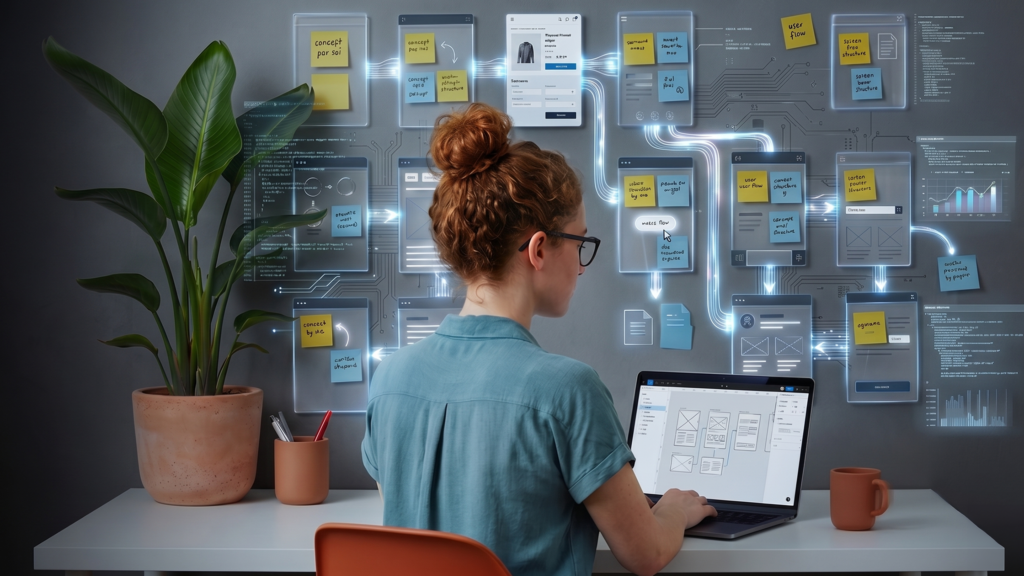
Then we transformed that into a system built specifically around her practice.
A custom application designed around the way she already operated.
Not generic.
Not theoretical.
Not built around someone else’s assumptions.
Built around reality.
And because the system was designed assuming new people would constantly need to learn it, onboarding became easier, training became clearer, and operations stopped depending entirely on repeated verbal explanations.
The result wasn’t just better organization.
It gave her time back.
Workdays that regularly stretched to twelve hours started looking more like normal eight-hour days again.
The clinic became easier to manage.
Training became less exhausting.
The business stopped relying entirely on memory and improvisation.
Good workflows are not about making people work like machines.
They’re about reducing unnecessary friction so talented people can focus on the work that actually matters.
If your business only works because you’re constantly explaining, correcting, remembering, and manually holding everything together, the issue usually isn’t effort.
It’s that the workflow was never designed to grow beyond you.
That’s where systems start becoming transformational.